Family:
MYRTACEAE
Eucalyptus camaldulensis
River Red Gum
Other Names: Dharnya, Biel

Regional Subspecies:
E. c. subsp. acuta, E. c. subsp. arida, E. c. subsp. camaldulensis
HABIT:
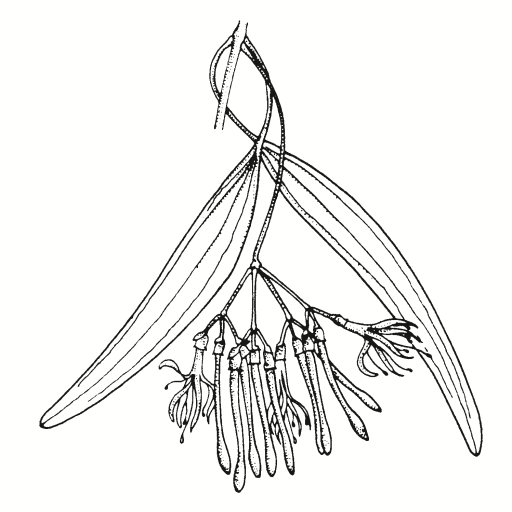
Tree to 30 m high (or taller), smooth bark shedding in ribbons or flakes. Large spreading crown, often twisted branches, dull green or grey-green leaves. White flowers, Dec-Feb, heavy flowering every 2-3 years. Fast-growing initially, very long-lived.
HABITAT & SITE PREFERENCE:
Dominant in grassy woodlands/forests on deep, rich alluvial soils near permanent water. Low-lying areas, occasional inundation, or accessible groundwater. Tolerates wind, some provenances tolerate salinity, drought, flood, and fire. Prefers 300 – 400 mm rainfall in the Riverina.
SEED COLLECTION & PROPAGATION:
Collect Mar-Sep, seeds shed soon after maturity. Propagate from seed (±700 seeds/gram), optimum germination temperature 35°C. Regenerates easily from seed, especially in summer rains and along roadsides.
VALUES & USES:
High-level windbreak cover, grass grows to trunk. Controls gully erosion and underground seepage. Salt-tolerant provenances used in rehabilitation. Excellent habitat, forms base of creek/river habitats, hollows for nesting, pollen/nectar for insects and birds. Important for fish habitat. Timber used for construction, sleepers, flooring, fencing, furniture. First Nations used bark for canoes and dishes, gum for drinks and medicine. Ornamental for large areas, bog gardens, pond edges. Excellent honey tree, leaves produce dyes, gum used medicinally.