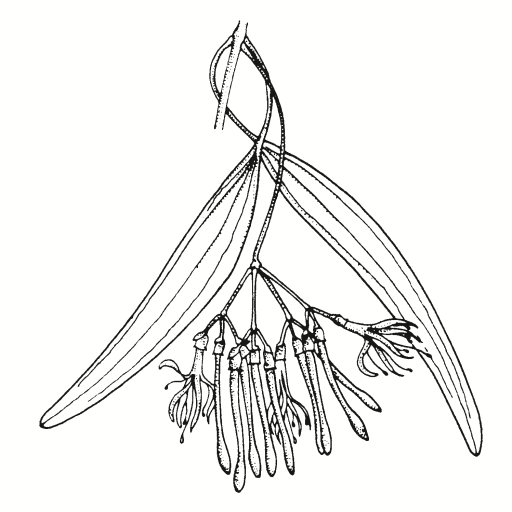
Family:
Cupressaceae
Callitris endlicheri
Black Cypress Pine
(syn. C. calcarata)
Black Cypress, Black Pine, Black Callitris.

Name Origin:
endlicheri — after S.L. Endlicher (1805-1849), Viennese botanist.
Regional Subspecies:
n/a
Similar Species:
Distinguished from White Cypress Pine (C. glaucophylla) by its cones and generally greener foliage, compared to the generally grey-blue foliage of White Cypress Pine.
Habit:
Tree to 15 m high, with mostly erect or (sometimes) spreading branches, and dark green foliage. Deeply furrowed, tough bark. Hardy, young plants susceptible to grass fires, larger trees tolerant.
Habitat & Site Preference:
Occurs on stony hills and ridges. Prefers well-drained soil, tolerates frost (to -8°C), poor soils, and moderate drought. Prefers 300 – 450 mm rainfall in the Riverina.
Seed Collection & Propagation:
Collect early Dec-late Jun, seeds released 3-8 weeks after maturity. Store seeds at 3-5°C. Propagate from seed (±281 viable/gram), sow around Oct due to slow germination. Optimum germination temperature is ±20°C. Regenerates from seed after fire or soil disturbance.
Values & Uses:
Excellent medium-level windbreak cover, maintains low foliage for shelter. Useful for catchment protection and erosion control. Seeds eaten by parrots and cockatoos, foliage provides refuge for small birds. Bark habitat for grubs and insects. Suitable fuelwood, high calorific value. Timber comparable to White Cypress Pine, used for fencing, flooring, furniture, and general construction. Bark yields tannin. Ornamental for gardens, parks, and avenues. Resin used in varnishes and as antihelmintic for horses.