Family:
Fabaceae
Acacia pycnantha
Golden Wattle
Other Names: Australian Golden Wattle, Green wattle, Broad-leaved Wattle, Witch, Black Wattle

Name Origin:
pycnantha — from Greek phchos, thick and compact, and anthos, flowers, referring to dense flower heads.
Regional Subspecies:
n/a
Habit:
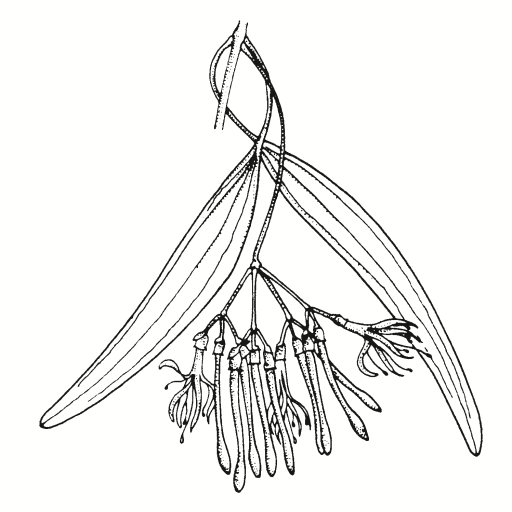
Erect or spreading tree or shrub, 3-8 m high, dark brown to greyish smooth or finely fissured bark. ‘Leaves’ 6-20 cm long. May form thickets. Golden-yellow, strongly scented flowers, Jul-Nov. Short-lived, fast-growing.
Habitat & Site Preference:
Usually dry sclerophyll forest, Box woodland, and heath on sandy and stony soils. Young plants frost-tender, mature plants reasonably frost tolerant. Tolerates drought, various soils, brief waterlogging, and shade. Prefers 300 – 500 mm rainfall in the Riverina.
Seed Collection & Propagation:
Collect early Nov-mid Jan, frequent large crops. Propagate from scarified seed (20-64 viable/gram), soak in boiling water before sowing. Regenerates from seed after fire, or without fire in noncompacted soil. Establishes very well when direct seeded.
Values & Uses:
Low-level cover in windbreaks. Stabilises soil due to fibrous roots, improves fertility (legume). Valuable habitat, flowers provide nectar for birds and insects, larvae and grubs provide food for birds, gum eaten by possums. Burns well, but not significant fuel source. Timber not durable. Bark rich in tannin. Ornamental, attractive foliage and flowers. Leaves produce gold dye. Gum used historically to treat diarrhoea.