Family:
Pittosporaceae
Bursaria spinosa
Native Blackthorn
Other Names: Blackthorn, Castanet Bush, Prickly Box, Native Olive, Native Boxthorn, Australian Boxthorn, Tupy
Name Origin:
Bursaria — from Latin bursa, a purse, referring to pouch-like capsules.
spinosa — from Latin spinosus, thorny, referring to thorny branches.
lasiophylla — from Greek lasios, woolly, and phyllon, leaf, referring to woolly underside of leaf.
Regional Subspecies:
Bursaria spinosa subsp. lasiophylla (Hairy Bursaria); B. s. subsp. spinosa (Sweet Bursaria)
Similar Species:
Distinguish Bursarias by the leaf underside. Hairy Bursaria has downy white leaf underside. Sweet Bursaria leaves green on both surfaces.
Habit:
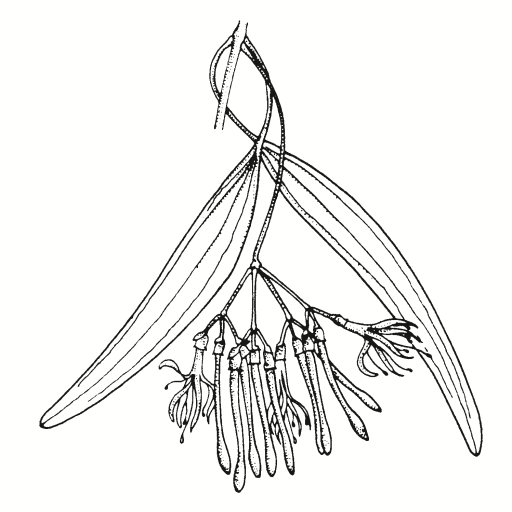
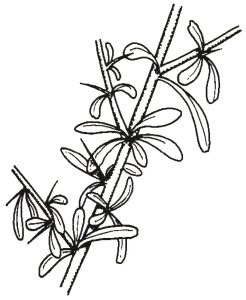
Shrub to 2.5 m high, clustered green leaves, hairy underside. White to cream flowers, mainly summer. Long-lived, may be slow-growing.
Habitat & Site Preference:
Dry sclerophyll forest or woodland on granite or metamorphic substrates. Prefers well-drained soil, tolerates frost and wind. Prefers 300 – 500 mm rainfall in the Riverina.
Seed Collection & Propagation:
Collect late Jan-early May when ripe fruit rattles. Timing varies by location. Propagate from seed (±190 viable/gram) or cuttings. Stratify seeds in moist sand for 6 weeks, sow Jun-Jul. Germination may take months, seedlings prone to damping-off. Regenerates from winddispersed seed over winter.
Values & Uses:
Excellent low-level windbreak cover. Controls gully erosion with fibrous roots. Useful habitat, hosts insects that control pests on eucalypts. Nectar source for beneficial wasps. Fragrant flowers attract butterflies, moths, and insects. Prickly plants provide refuge for small birds. Timber pale, tough, easily worked. Ornamental for hedges and cut flowers due to summer flowering and bronze winter capsules. Leaves contain aesculin, used historically for sunburn protection.