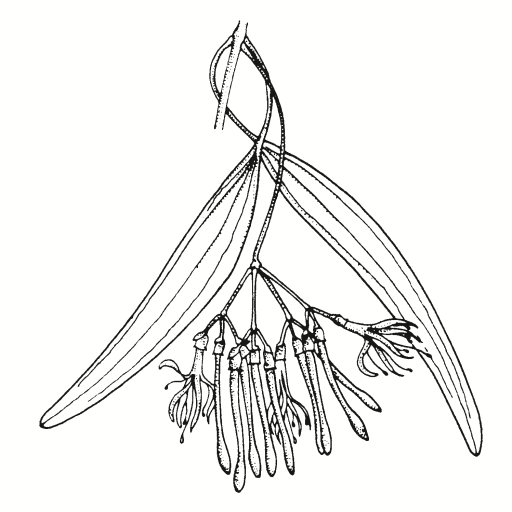
Family:
Casuarinaceae
Allocasuarina luehmannii
Bulloak
(syn. Casuarina luehmannii)
Other Names: Buloke

Name Origin:
Allocasuarina — meaning different from Casuarina. Allocasuarinas are distinguished from Casuarinas by the cones.
luehmannii — after J.G. Luehmann (1843 – 1904), past Director of Melbourne Botanic Gardens.
Regional Subspecies:
n/a
Similar Species:
Distinguished from Drooping Sheoak (Allocasuarina verticillata) mainly by its cones, which are much shorter, and by its more upright habit.
Habit:
Tree 5-15 m high, rough, deeply fissured bark, ascending branches. Yellowish male flower spikes, Oct-Nov. Moderate growth rate, long-lived, fire-sensitive, nitrogen-fixing.
Habitat & Site Preference:
Woodland on non-calcareous soil, often with White Cypress Pine and Grey Box. Plains, slopes, drier areas, swamp edges. Prefers sandy clays, tolerates inundation, drought, frost, wind, and saline soil. Prefers 300 – 500 mm rainfall in the Riverina.
Seed Collection & Propagation:
Collect mid Dec-mid May. Seeds shed in early autumn. Store in the refrigerator or sow fresh. Germinates in 2-5 weeks from untreated seed (84-119 viable/gram). Can stratify seeds in freezer for 2 weeks before sowing in cooler months. Regenerates from suckers and cut stumps. Seedlings germinate in warm, wet conditions late summer-early autumn or early-mid spring. Protect from livestock and rabbits for 5-7 years.
Values & Uses:
Medium-level windbreak cover, partial shade. Leaf litter stabilises soil, improves fertility (nitrogen-fixing). Excellent habitat, food source for birds, roost/nest sites. Excellent fuelwood, strong heat. Timber used for fencing and wood turning. Ornamental for parks and gardens. Potential firewood crop, tolerates lopping for drought fodder.