Family:
MYRTACEAE
Eucalyptus macrorhyncha
Red Stringybark
Other Names: Stringybark
Regional Subspecies:
n/a
HABIT:
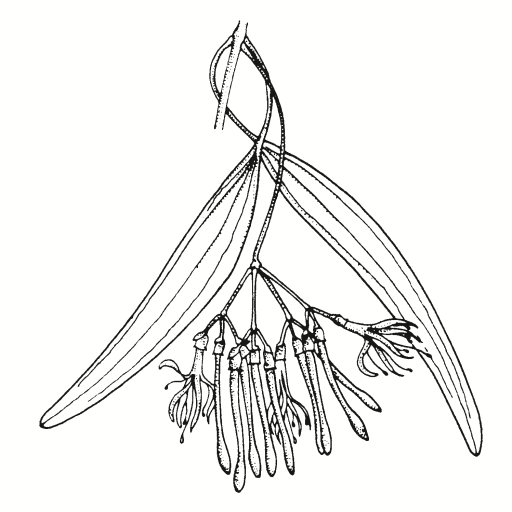
Upright tree to 35 m high (often less) with grey to red-brown, rough, stringy bark to small branches. Green adult leaves. Profuse, conspicuous, white-cream flowers (Jan-Jun).
HABITAT & SITE PREFERENCE:
On poor, well-drained, shallow soils in low to moderate rainfall zones (300 to 450 mm). Tolerates frost, hot/dry conditions and harsh sites.
SEED COLLECTION & PROPAGATION:
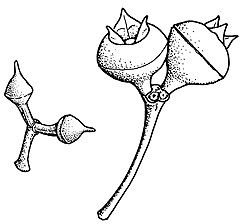
Collect mainly in summer, though seeds are held for many years. Extract seeds from old woody capsules by heating in an oven at 200°C for 15 minutes. Propagate from seed (approx. 68 viable seeds per gram). Optimum germination temperature is 16°C. Adding local soil or leaf litter to potting mix may improve seedling survival. Establishes well when direct seeded. Requires fencing to prevent ringbarking, particularly from cattle seeking roughage.
VALUES & USES:
Useful windbreak with medium-level cover. Good shade from dense, compact crown. Useful to revegetate hilly recharge sites. Pale red-brown timber, moderately fine-textured, often with interlocked grain. Used in flooring, furniture, veneers, and fencing. Good habitat, flowers are a nectar source for native insects, birds, and mammals. Native birds use bark for nesting material. Shade for large gardens, but not particularly ornamental Leaves produce lemon or brown-green dye. Kino from bark is astringent. Leaves are a source of rutin.