Family:
SCROPHULARIACEAE
Myoporum platycarpum
Sugarwood
Other Names: Sandalwood, False Sandalwood, Bastard Sandalwood, Dogwood, Sugar Tree
Regional Subspecies:
M. p. subsp. perbellum, M. p. subsp. platycarpum
HABIT:
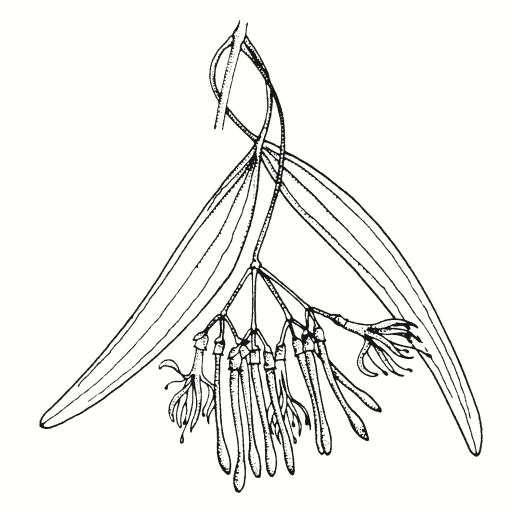
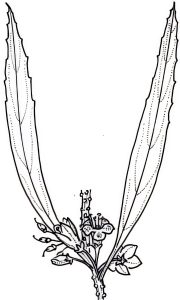
Tree to 10 m high with sticky young growth. Leaves green, linear-lanceolate to 6 cm long. Bell-shaped, white flowers in groups of 4-8 in leaf axils. Fruit a dry drupe. Flowers from August to December.
HABITAT & SITE PREFERENCE:
Woodland areas with red or red-brown earth and solonized brown soil. Abundant in mallee and Belah-Rosewood communities. Prefers well-drained soils and lots of sun. Prefers 300 to 450 mm rainfall in the Riverina region.
SEED COLLECTION & PROPAGATION:
Collect seeds from Feb-Mar. Propagate from seed or from cuttings of firm young growth. Cuttings may be slow to produce roots. Hardy to most frost. Withstands extended dry periods.
VALUES & USES:
Foliage readily eaten by stock. Manna exuded by the tree tastes sugary and was eaten by First Nations People. Resin was used by First Nations People to cement stone heads to implements.